
If there’s one thing that fans have learned about the Los Angeles Clippers over the past year, it’s that they still lack a winning culture.
That should have been made obvious by the fact that they’re one of the 10 teams that have never won an NBA championship. However, their record helps mask deeper issues. During Doc Rivers’ time as the Clippers head coach, Los Angeles went 356-208 during the regular season. Yet, they never made it past the second round of the NBA Playoffs. With Ty Lue as head coach, the Clippers are 260-194 in the regular season. Even so, it’s been five years since they made it past the first round of the NBA Playoffs.
Clippers Lack of Winning Culture Now More Apparent Than Ever
Sure, Blake Griffin, Paul George and Kawhi Leonard‘s injuries had a significant impact on their chances of breaking their generational curse. Nevertheless, between the investigative journalism of Pablo Torre and Ramona Shelburne, it’s about more than that. It’s about Clippers owner Steve Ballmer, Clippers general manager Lawrence Frank, and the team’s coaching staffs.
Steve Ballmer
To preface the following, Ballmer et al. are innocent until proven guilty and an investigation is ongoing.
Last August, Torre revealed that Ballmer and Clippers minority owner Dennis Wong had been implicated in an under-the-table payment scheme that allowed them to sign Leonard. At the time, many were focused on the salary cap circumvention. The mindstate that Ballmer must have had to be willing to go that far out of a desire to be competitive was hardly discussed. In fact, the response towards Leonard was more vitriolic, he and “Uncle Dennis” characterized as strong-armers.
As the months pass, more people should be considering who Ballmer is though. His success in the technology sector is well-documented, as is his keen intelligence. In his new role, he comes across as being in the eccentric uncle archetype. That said, neither intellect nor weirdness reveal much about a person’s motivations. This is what makes the allegations against Ballmer all the more fascinating; they seemingly reveal that his aspirations (pun intended) to be successful don’t preclude rule-breaking.
If organizational psychology’s trickle-down effect is correct, Ballmer’s subordinates are influenced by him doing a wrong and convincing people it’s right. They may even seek to emulate that behavior. While that may not look like a sinecure endorsement deal, those types of actions could include dismissing a Hall of Fame during his retirement tour all because he was holding a playoff contender accountable.
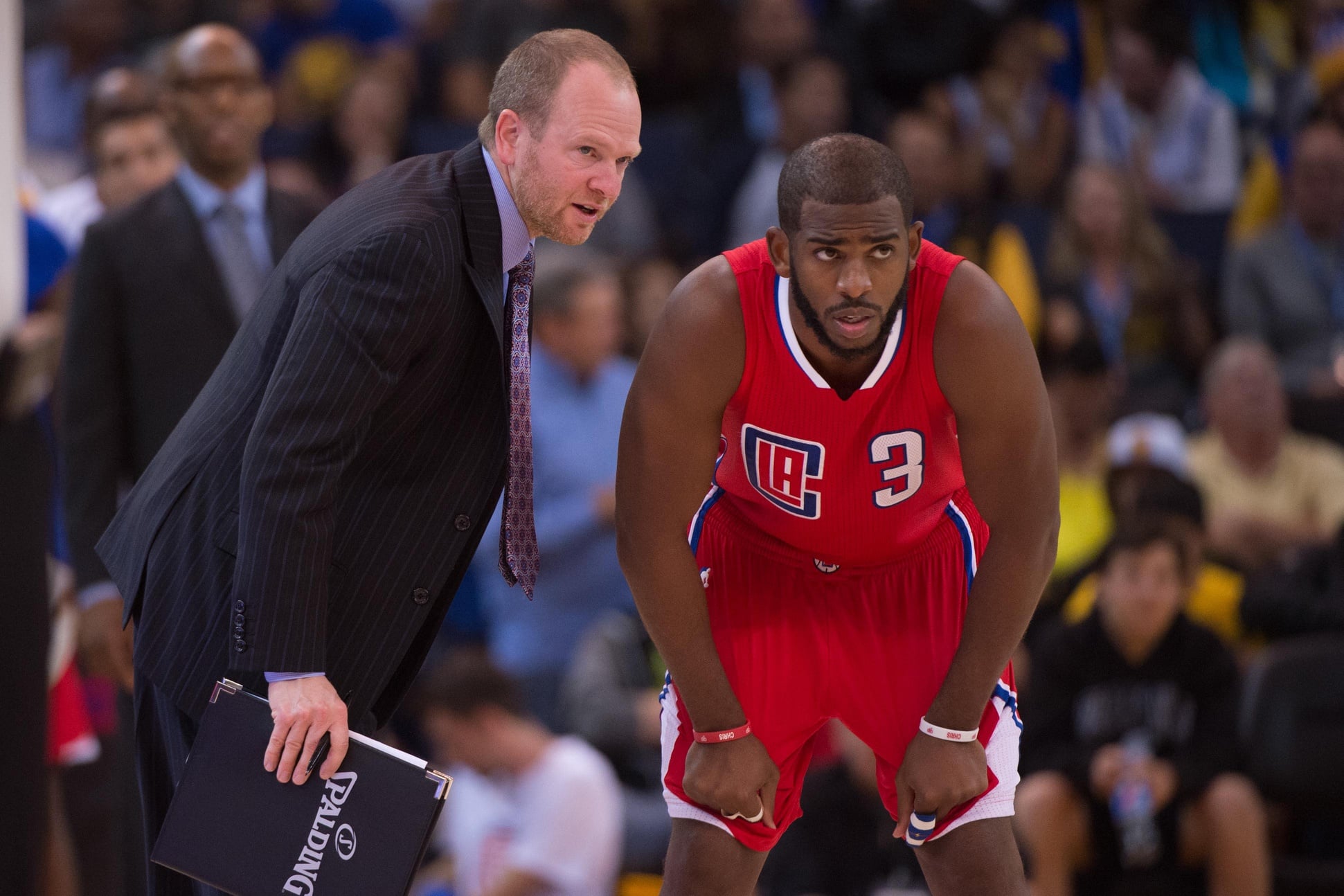
Lawrence Frank
Just one month after Ballmer took ownership of the Clippers, Frank was hired to be Rivers’ assistant on L.A.’s bench. Two years later, he had moved from the bench to a suite, having been promoted to executive vice president. In 2017, Frank took over Rivers’ former post as president of basketball operations, the Clippers wanting the longtime head coach to focus on the x’s and o’s.
In his first season as the organization’s president, Los Angeles failed to reach the playoffs, breaking a six-year streak of consecutive postseason appearances. His first notable move as president was trading Chris Paul to the Houston Rockets. Then he sent Jamal Crawford away in a three-team deal with the Atlanta Hawks and Denver Nuggets. Ahead of the 2017-18 NBA deadline, he dealt Griffin to the Detroit Pistons.
These were the first transactions that should have illuminated that Frank’s too dismissive of chemistry and continuity as the foundations of a team culture. Paul, having joined the Clippers in 2011, was integral to Lob City’s construction. Crawford, a highly popular three-time Sixth Man of the Year, had played for them since 2012-13. Griffin, a cornerstone player, had been with the franchise since they drafted him first overall in 2009.
When L.A. fired Rivers in 2020, he “believed the team was undone by a lack of chemistry and leadership,” per Shelburne and Ohm Youngmisuk (ESPN). Ironically, Rivers also thought the team was in need of a true point guard.
Clippers Coaches
Doc Rivers, Ty Lue
Whether it’s been Rivers or Lue running the show, there have been complaints about the team’s competitive spirit. Rivers himself decried his team’s lack of intensity during his stint as head coach. During Lue’s, it was Paul that was miffed by the team’s aloofness. He “raised concerns about the team’s culture — noting the lack of conversation in the group text chat and the lack of time the players spent together off the court.”
Rather than listen to Rivers, they fired him. They did at least replace him with a person with a reputation of being liked by his players in Lue. Yet, Lue’s not so much of a player’s coach that he was willing to take Paul’s advice, despite him being much more accomplished and successful in the NBA. To that point, normally coaches would take the input of a 12-time All-Star, 11-time All-NBA and nine-time All-Defensive selection to heart. You know, the player with the second-most assists (12,552) and steals (2,728) all-time?
Instead of accepting Paul’s input, they forced the legend into early retirement. The fact that he entered the season believing it was his last makes their actions even more distasteful. Factoring in Paul’s history with the franchise, it was truly the wrong way to go about it. After all, the only crime he’s guilty of is being vocal about wanting everyone to play to the best of their ability.
Unfortunately, Lue’s pride got in the way. He was more concerned about his coaching staff being shown up than his coaching staff showing up the right way. His comments about why he hadn’t reached out (h/t Shelburne) to Paul also unmasked a certain amount of childishness in his personality.
“Yeah, well, he hasn’t called me either.”
Jeff Van Gundy
Clippers lead assistant Jeff Van Gundy let his ego block his view, too. Him giving Paul the cold shoulder was shameful in and of itself, frankly. No 64-year-old man should be displaying the social skills of a 14-year-old. His behavior after accusing Paul of changing the defensive coverage without his approval was nonsensical. After Van Gundy was told by other players that Paul didn’t alter the coverages, they sent the future Hall of Fame point guard to the principal’s office.
The irony is that Van Gundy is a lot like Paul. Both are highly opinionated, to the point of being abrasive, but they’re generally well-meaning. They were also pretty successful when leading the show. Perhaps this is what made them clash. Instead of mixing oil and water, it was like combining fire with fire. Eventually, the flames that were supposed to ignite a championship run started to burn the house down.
All of that being said, Van Gundy hasn’t accomplished anything that should have had him acting like that. He’s never led a team to a championship. He was out of the coaching game for 18 years prior to L.A. hiring him last season. While was gone, Paul was challenging for the mantle of the best point guard of all-time.
© Kiyoshi Mio-Imagn Images