

Editor’s Note: This is the fourth in a series of stories where Dodger broadcasters reflect on their favorite call from 2025.
Previous stories:
Joe Davis on Freeman’s World Series walk-off
José Mota on Ohtani’s moonshot and masterpiece
Tim Neverett on Kershaw’s 3,000th career strikeout
by Megan Garcia
The Event:
Clayton Kershaw’s strikes out the 3,000th batter in his career in the sixth inning against the White Sox on July 2.
On the Call:
Stephen Nelson
The Call:
“Curveball down and inside, a ball and a strike to the №9 hitter Capra. Clayton Kershaw two pitches away from 100; one strikeout away from 3,000.
One and two…the Ravine rises…ready to erupt…three K for Kershaw!”
The split second of hesitation felt like an eternity. Clayton Kershaw’s slider caught the outside corner of the strike zone, but home plate umpire Jim Wolf didn’t immediately signal for a strike.
Dodger broadcaster Stephen Nelson held his breath. Kershaw was on the doorstep of the 3,000 Strikeout Club, but the White Sox weren’t budging offensively. That July 2 night felt like a cat-and-mouse game watching the future Hall of Famer chase three strikeouts.
Kershaw was nearing 100 pitches, a threshold he hadn’t touched in two years. Doubt had crept in a handful of pitches ago for Nelson — maybe history wouldn’t be accomplished at Dodger Stadium that night.
“I resigned myself to the fact that it wouldn’t happen. You have no control over it; either it happens or it doesn’t,” Nelson said. “We saw how the White Sox were seemingly determined to not let it happen that night. They were an aggressive team and putting the ball in play. He was grinding through that outing. I thought maybe it wasn’t in the cards.”
But then, with two outs in the sixth inning, Wolf stepped back with his right foot. He cocked his right arm back and punched his fist into the air — a called third strike.
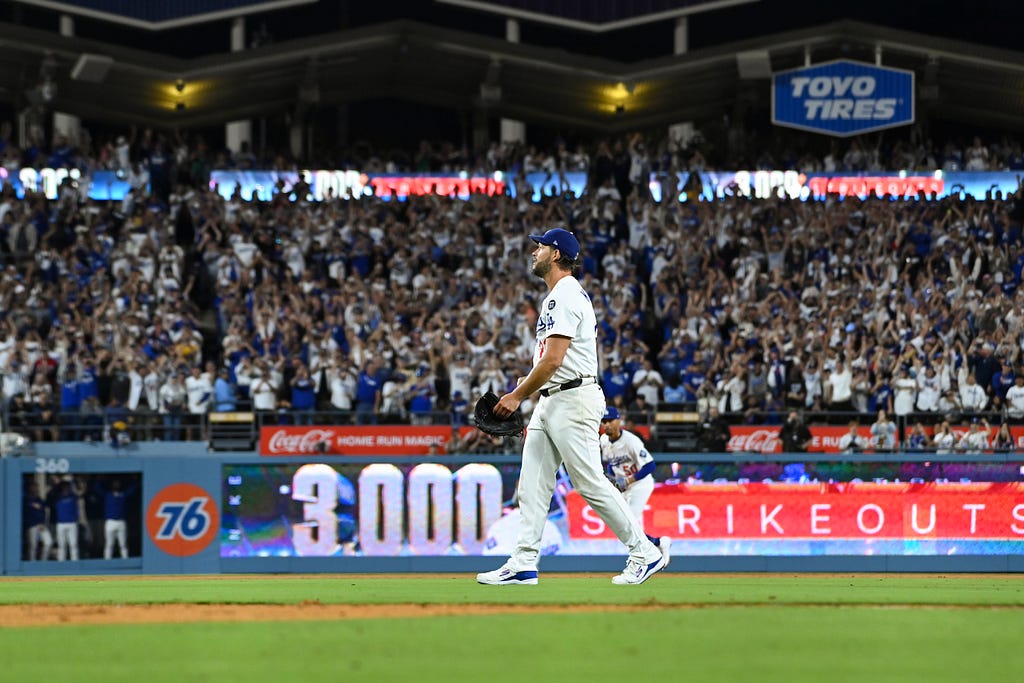
Nelson pumped his fists. He looked to Orel Hershiser on his right with eyes wide open. He returned his gaze to the legendary left-hander walking off the mound. Dodger Stadium reverberated with emotion.
History was made.
Nelson’s call of Kershaw’s momentous strikeout on July 2, his favorite of the regular season, flowed through the airwaves and into homes throughout Los Angeles. His voice became a soundtrack for a significant moment in baseball.
Nelson intricately prepared for it. Baseball’s unpredictability doesn’t allow a broadcaster to rehearse a call, but Kershaw’s career milestone was different.
Nelson studied every piece of the southpaw’s 18-year career. Not a single stone was left unturned leading up to the 37-second call.
“I did a lot of studying on Clayton’s career and his history, from the beginning, even before his big-league debut,” Nelson said. “I talked with people who were there who could give me a firsthand tell of the tale.”
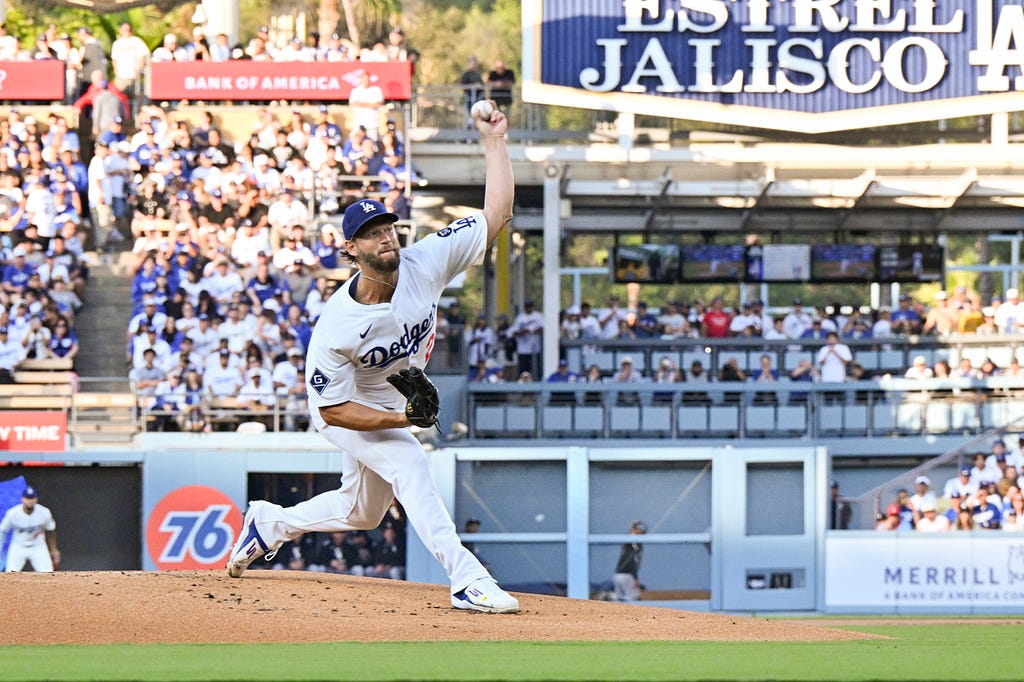
But that hot summer night epitomized the fleeting nature of baseball. As the game progressed, it felt like history would occur in Kershaw’s next start in Milwaukee, the same site where Kershaw notched his 2,000th career strikeout.
The pendulum of emotions swung in different ways throughout the game, for Dodger fans and Nelson. They were on the edge of their seats at the possibility of witnessing history by one of the greatest pitchers in baseball, who debuted with Dodgers as a 20-year-old pitcher in 2008.
Restlessness took over by the third inning with the White Sox leading 4–0 and Kershaw with one strikeout to that point.
Later, fear was the emotion in the sixth when Max Muncy writhed in pain by third base. He tagged out baserunner Michael A. Taylor in a steal attempt and secured the second out, but his right knee was struck by Taylor’s helmet.
“I thought he was done for the year,” Nelson recalled. “Max is really tough, but to see him writhing in pain like that, it’s got to be pretty bad.
“It’s already an emotionally charged night because everyone’s dialed up for Kershaw, but at the end of the day, the bigger picture was the Dodgers trying to go back-to-back in the World Series. And at the time, Muncy was one of the hottest hitters in baseball.”
The game resumed once Muncy was assisted off the field. The focus returned to Kershaw. He stepped on the mound once again to face his last batter of the game.
A slider put him in a 1–2 count. Then, his final slider caught the outside corner.
“It was really just joining Dodger fans in that moment,” Nelson said. “You have to be a sports fan, like we are, to understand the power of those types of scenes where the roar of the crowd — 50,000 people — in unison feeling this same thing. It was a melting pot of emotions.”
Behind the Mic: Stephen Nelson calls Kershaw’s history-making 3000th strikeout was originally published in Dodger Insider on Medium, where people are continuing the conversation by highlighting and responding to this story.